
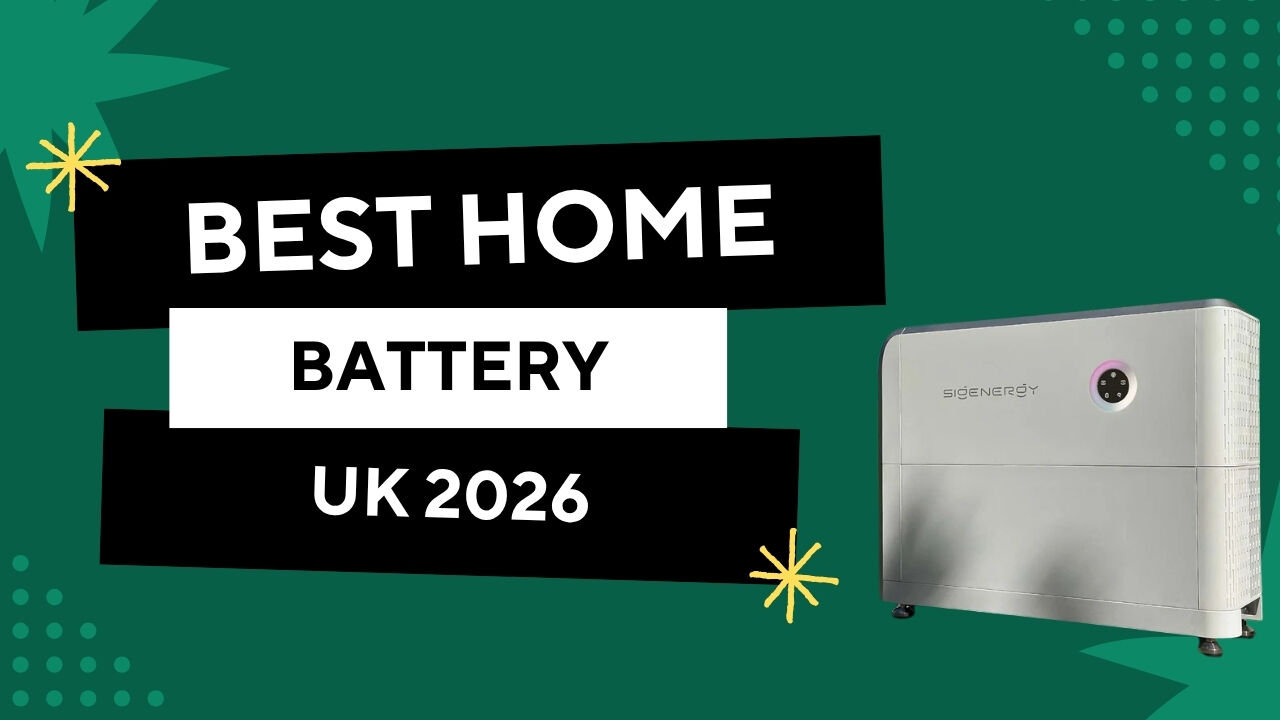
We fit both of these, which makes this comparison easier to write honestly than it would be if we only sold one. There is no universal winner here — there is a right answer for your house, and it usually becomes obvious once you know two things: whether your energy needs are settled, and whether there is an electric car involved.
The short version
| Sigenergy SigenStor | Tesla Powerwall 3 | |
|---|---|---|
| Capacity | 6 or 9 kWh modules, up to ~54 kWh | 13.5 kWh, fixed |
| Expandable | Yes — add modules later | Add a second unit, not a module |
| EV charging | DC charging built into the tower | Separate wallbox alongside |
| Backup | Whole-home capable | Whole-home standard, no sub-board |
| Peak efficiency | 97.6% | — |
| Warranty | 10 years | 10 years |
| From, installed | £6,995 | £8,995 |
Full pricing for everything we fit is on the battery cost table.
Where Powerwall 3 wins
Simplicity. It is one unit, 13.5 kWh, and there is no sizing decision to agonise over. For a lot of households that is genuinely the feature. You are not choosing module counts or planning for a future you have not decided on yet.
Backup, with less around it. Powerwall does whole-home backup through the Tesla Gateway and does not need a separate EPS sub-board feeding selected circuits. On other systems, whole-home backup means more kit on the wall. If riding through power cuts is the main reason you are buying, this is the cleanest route.
The app, and the track record. Tesla has been doing this in UK homes for a decade. The app is mature, most people have already seen it, and there is a very deep pool of field experience behind it.
The Tesla Energy Plan. Powerwall is the only battery we fit that is eligible, and it carries the highest flat export rate available to the households that qualify.
Where the SigenStor wins
It starts smaller and grows. This is the real difference. You can begin with a single module and add more as your life changes — one controller takes up to six, around 54 kWh. If you are planning a heat pump, a second EV or an extension, you are not committing to a final capacity today.
EV charging is inside the box. DC charging is built into the tower, so power goes from the panels to the car without the conversion step an AC wallbox has to make. If you have an EV and solar, this is the tidiest way to connect them — one product, one app, one warranty instead of three.
It reaches higher capacity. 54 kWh is far beyond a single Powerwall. Large houses, home businesses and properties with heat pumps and multiple EVs can get there without a wall of separate units.
Five products, one install. Solar inverter, battery, EV charging, backup and energy management in one tower. Less on the wall, and one place to look when something needs attention.
How we actually decide, on site
The survey usually settles it within about ten minutes, on three questions.
1. Are your energy needs settled or growing? Settled — the house is the house, no EV plans, no heat pump — points at Powerwall. Growing points at SigenStor, because you can buy for now and expand into it.
2. Is there an electric car, or will there be? If yes, and you want charging integrated rather than a separate wallbox, SigenStor. If you already have a charger you are happy with, that advantage largely disappears.
3. What is the budget actually for? This is where we push back most. If the goal is straightforward tariff arbitrage — charge cheap, discharge at peak — then neither of these may be the right spend. The Fox ESS EVO does that job from £4,500 and it is frequently the honest answer. We would rather fit the cheaper system and have you recommend us than sell you integration you will never use.
What neither of them changes
Whichever you fit, the tariff does the earning. A battery moves your consumption from expensive electricity to cheap electricity; the hardware makes that possible but the tariff sets the size of the prize. Charging at roughly 7–8p/kWh overnight and avoiding 25–30p/kWh at peak is where the saving lives — see the best time-of-use tariff in 2026.
Both also need a DNO notification. Powerwall 3 carries an 11.5 kW inverter, so most single-unit installs need a G99 application to Northern Powergrid rather than the G98 fast track — that is a lead-time difference, not a cost one, and we submit it either way.
And both are covered by the 0% VAT rate on domestic battery storage until 31 March 2027.
So which one?
If your needs are settled and you want the simplest capable system with the best backup story, fit the Powerwall. If you want to start smaller, expand later, or bring EV charging into the same unit, fit the SigenStor.
If you are not sure, that is what the free survey is for. See the Sigenergy installer page, the Tesla Powerwall installer page, or compare everything we fit on the battery hub.