
If you’re weighing up home battery installation in the North East, the two questions we hear most at survey are “what actually happens on the day?” and “what will it cost me fitted?” This guide answers both, plus the bits that are specific to our patch — Northern Powergrid paperwork, the quirks of Victorian terrace wiring, and what salt air does to kit on the coast.
AMP Renewables install batteries every week across Newcastle, Sunderland, Durham, Teesside and Northumberland, both standalone and paired with solar. Here’s the honest run-through.
What a home battery installation involves, day by day
Before install day: the survey. A 30-45 minute visit. We check your consumer unit, meter position, incoming supply, and where the battery will physically live. We size the system against your actual usage — smart meter data if you have it, bills if you don’t — and confirm whether your install goes through the G98 or G99 grid route (more on that below). You get a fixed-price quote, not an estimate.
Install day, morning. The engineers mount the battery and inverter — wall-mounted or floor-standing depending on the model — and run the DC cabling between them. A 10kWh battery weighs 80-120kg, so floor-standing units go on a solid base and wall-mounted units go into masonry, not plasterboard.
Install day, afternoon. AC connection into your consumer unit on a dedicated circuit, CT clamp on the incoming supply so the system can see your import and export in real time, and an isolator so the battery can be safely disconnected. If you’re having backup capability (EPS), the essential circuits get wired to the battery’s backup output.
Commissioning. The system is energised, tested, and configured: charge and discharge windows set against your tariff, the monitoring app installed on your phone, and a full handover of how it all works. For most installs you’re done in one working day. Add a consumer unit upgrade and it stretches to a day and a half.
After install day. We submit the paperwork to Northern Powergrid and register your battery warranty. You don’t chase anything.
North East specifics: the three things that shape your install
Northern Powergrid and the G98/G99 rules
Northern Powergrid is the Distribution Network Operator (DNO) for the whole North East, and every grid-connected battery has to be notified to them. There are two routes:
- G98 — the fast-track route for systems exporting up to 3.68kW per phase. Install first, notify within 28 days. Most single-battery domestic installs fit here.
- G99 — required for anything above 3.68kW per phase. This needs Northern Powergrid’s approval before installation, which can add a few weeks to the timeline. Larger batteries, high-output hybrid inverters, and battery-plus-solar combinations often tip into G99 territory.
AMP handle the DNO notification on every job — G98 or G99, it’s included in the quote and we manage the timeline. If a battery quote from anyone doesn’t mention DNO notification, ask why.
Victorian terrace consumer units
A big slice of the housing stock in Newcastle, Sunderland, Durham and the older Teesside streets is Victorian or Edwardian terrace, and the consumer units in them vary wildly — from modern RCBO boards to rewireable fuse boxes that predate decimal currency. A battery needs a dedicated, properly protected circuit, so if your board has no spare ways or no RCD protection, it gets upgraded as part of the job. We flag this at survey, never on install day, and price it into the fixed quote. Under-stairs cupboards — the classic terrace consumer unit location — are usually also a decent battery spot, which keeps cable runs short and costs down.
Coastal properties
From Whitley Bay down through Sunderland to Hartlepool and Redcar, salt air is a real factor. It corrodes external enclosures, glands and fixings faster than inland conditions. Our default on coastal jobs is to install the battery inside — garage, utility, cupboard — rather than on an external wall. Where outside is unavoidable, we specify kit with a suitable IP rating and stainless fixings, and position it out of direct spray-line exposure.
Home battery installation costs in the North East, 2026
| System | Typical use case | Fitted cost |
|---|---|---|
| 5kWh battery | Smaller homes, low overnight usage, tariff-shifting starter | £3,000 - £4,500 |
| 10kWh battery | The North East sweet spot — 3-bed family homes | £4,500 - £6,500 |
| Tesla Powerwall (13.5kWh) | High usage, whole-home backup, premium ecosystem | £8,500 - £10,000 |
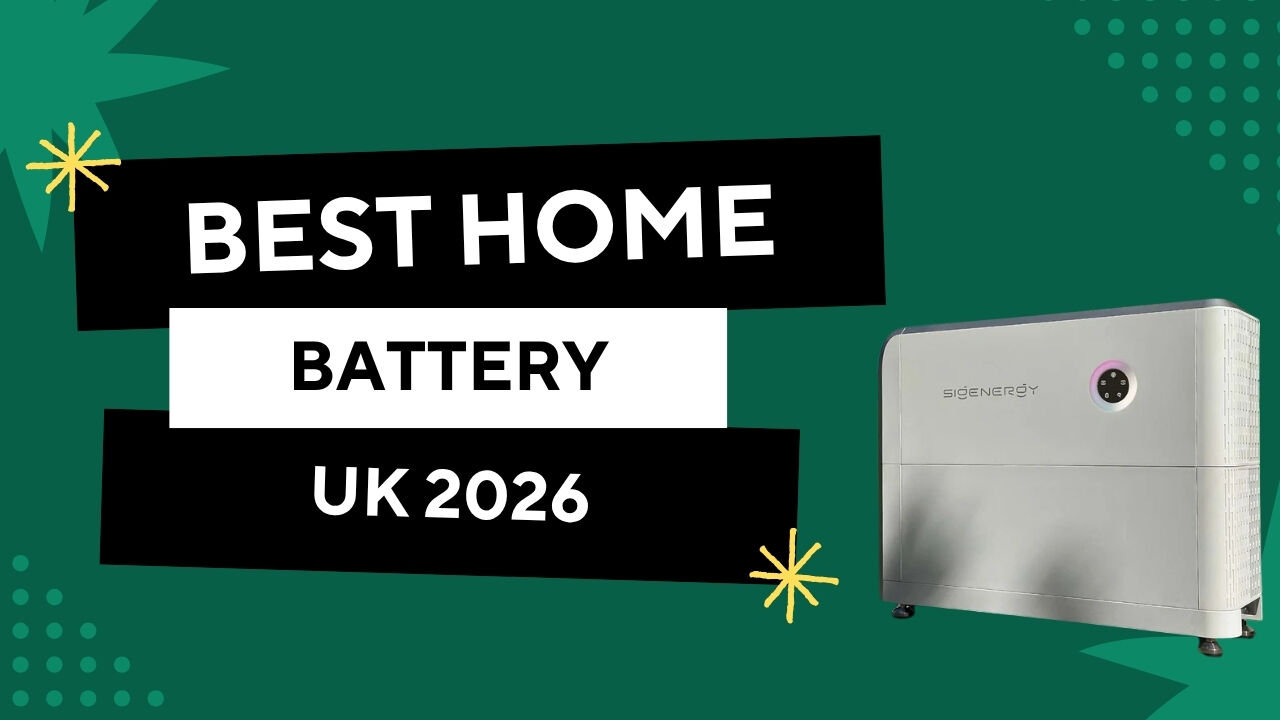
Those are installed prices — battery, inverter, electrical work, commissioning and DNO notification included. What moves a quote within the range: consumer unit upgrades, long cable runs between meter and battery position, and EPS backup wiring. Brand choice matters too — we compared the units we actually fit in our best home battery UK 2026 guide.
Standalone vs solar-paired: which makes sense?
Standalone battery, no solar. This works on the strength of time-of-use tariffs alone. The battery charges overnight at the cheap rate on an Octopus Go-type tariff and powers your home through the day, replacing peak-rate units. For a typical North East household that saves £400-800 a year. No roof work, no scaffolding, one-day install. It’s the right answer for shaded roofs, flats with no roof rights, and anyone who wants the fastest route to lower bills.
Solar-paired battery. If you have solar or you’re adding it, the battery stores your surplus generation instead of exporting it for pennies, then layers tariff-shifting on top through the winter. Higher upfront cost, bigger annual saving, and the system that makes most sense if your roof is viable.
The EV wildcard. If you drive an electric car, vehicle-to-home is starting to change this maths — some EVs can now power your house from a 60-80kWh traction battery. We keep a live list of V2H-compatible cars if you want to see whether your car (or your next one) qualifies.
Not sure which route fits? Our home battery service page breaks down the systems we install, or request a quote and we’ll size it against your actual usage.
Where we install
AMP Renewables cover the whole North East from our regional bases: Newcastle and the wider Tyneside area, Sunderland and Wearside, Durham and the county towns, and the full Teesside conurbation — Middlesbrough, Stockton-on-Tees, Hartlepool and Darlington — plus Northumberland from Cramlington up to the market towns. Most addresses are within 40 minutes of an AMP engineer, which is why we can usually survey within the week. If you’re in the Tees Valley, start with our Teesside battery installation page; Darlington and the A1 corridor have their own dedicated page too.
Questions to ask any battery installer (including us)
- Are your electricians NICEIC registered? Battery installation is consumer-unit-level electrical work. AMP’s installation teams are NICEIC registered.
- Who handles the Northern Powergrid notification? The installer should, on every job, and it should be in the quote. If they can’t tell you whether your install is G98 or G99, walk away.
- Is the quote fixed-price after a survey? Drive-by quotes miss consumer unit condition and cable runs, and the difference lands on you on install day.
- What’s the warranty, and who backs it? The batteries we fit carry 10-year-plus manufacturer warranties; we register them for you and remain your first call if anything needs attention.
- Where exactly will the battery go, and why? A good installer explains the placement logic — temperature, cable run, coastal exposure — not just “wherever fits.”
Battery installation is a one-day job when it’s planned properly and a headache when it isn’t. If you want a fixed price for your home — standalone or solar-paired — get a quote and we’ll take it from there.